AI Grew Up While Most People Were Still Laughing at It
From odd image maker to everyday business advantage
At first, AI felt like a party trick.
You typed in a few words and it gave you a strange image. A robot with six fingers. A futuristic city that looked impressive until you noticed the cars were melting into the road. A business logo that almost worked, but not quite.
People played with it, laughed at it, shared it, and then moved on.
For many business owners, that was the first chapter of AI.
Interesting. Entertaining. Clever.
But not serious.
It looked like something for designers, tech people, students, or people with too much time on their hands. It was smart enough to get attention, but not trusted enough to enter the engine room of a business.
Then quietly, almost without asking permission, AI started changing.
It stopped being just a machine that made odd pictures and started becoming something far more useful.
It started helping people think.
The blank page changed everything
A business owner sits late at night with a blank proposal in front of him.
He is tired from the day. The idea is there. The experience is there. The opportunity is real.
But the words are not coming.
In the old days, that blank page could steal an hour. Sometimes two. Sometimes it would kill the momentum completely.
Now he opens ChatGPT and asks for structure.
Not the final answer. Not magic. Not a shortcut around thinking.
Just a starting point.
Suddenly, the blank page is no longer blank.
There is a framework. A direction. A first draft. Something to challenge, edit, improve, and make his own.
That was the moment AI changed from a toy into a tool.
Not because it replaced the business owner.
Because it helped him move.
And that is where the real story begins.
AI did not become mainstream because it was flashy
AI did not move into mainstream life because people needed more futuristic noise.
It moved in because modern work is messy.
Business is faster than it has ever been. Customers expect answers now. Marketing needs content every day. Teams need direction. Owners need plans. Everyone is drowning in meetings, messages, admin, ideas, half-finished tasks, and pressure.
The modern business world does not punish you only for being wrong.
It punishes you for being slow.
And AI arrived at exactly the right time.
At first, people used it for small things. A better email. A caption. A product description. A few ideas for a campaign.
Then they started going deeper.
They used it to plan a week. Build a content calendar. Prepare for a difficult conversation. Analyse a customer complaint. Rewrite a proposal. Create a sales script. Turn messy thoughts into a clear plan.
Bit by bit, AI moved from the outside of the business to the inside.
From experiment to habit.
From habit to system.
The real power is not the prompt. It is the setup.
This is the part many people still miss.
The power of AI is not in asking one clever question.
The power is in building AI into the rhythm of how you work.
A serious business does not need AI to be cute. It needs AI to make the business sharper.
It needs help turning ideas into action. It needs better communication. It needs cleaner systems. It needs faster thinking. It needs planning that does not disappear after one meeting. It needs staff who can work with better structure, not just more pressure.
This is where AI becomes powerful.
Because when a business owner learns how to use it properly, the pace of the business changes.
The owner who used to carry everything in his head can now turn his thoughts into documents, plans, instructions, and workflows.
The team that used to wait for direction can now work from clearer briefs.
The marketing that used to happen randomly can now follow a plan.
The sales process that lived in one person’s memory can now become a script, a system, and a training tool.
The admin that kept being delayed can finally be broken down and handled.
AI does not create discipline by itself.
But it gives disciplined people more power.
And it exposes undisciplined businesses very quickly.
AI rewards clarity
AI works best when you know where you are going.
It rewards clarity. It rewards context. It rewards sharp instructions. It rewards people who can explain the outcome they want.
Ask it a lazy question, and it gives you a lazy answer.
Give it direction, and it becomes a serious partner.
That is why the future will not belong to people who simply “use AI.”
Everyone will use AI.
That will become normal.
The advantage will belong to people who know how to direct AI.
There is a massive difference between typing:
“Write me a marketing plan.”
And saying:
“Here is my business, here is my customer, here is my market, here is what is not working, here is what I want to achieve, now help me build a 90-day plan I can actually execute.”
One is a prompt.
The other is leadership.
And that is the point.
AI does not remove the need for leadership.
It demands better leadership.
It forces you to think about what you really want. It forces you to give context. It forces you to choose direction. It forces you to stop hiding behind vague ideas and start building with structure.
AI is becoming normal business infrastructure
AI is becoming part of normal business life because business has always needed what AI now helps provide:
Clarity.
Speed.
Structure.
Communication.
Momentum.</p>
The people who still dismiss it are making the same mistake many made with websites, email, smartphones, social media, and online marketing.
At first they say:
“It’s just a trend.”
Then they say:
“Our customers do not care about that.”
Then they say:
“We will look at it later.”
And eventually they ask why the market moved on without them.
AI is not waiting for anyone to feel ready.
It is already inside the way people write, plan, sell, learn, communicate, and build. It is already helping small teams look bigger, slow teams move faster, and sharp people become sharper.
That does not mean every answer it gives is right.
It does not mean human judgement disappears.
It does not mean experience no longer matters.
Actually, experience matters more.
Because AI without human judgement is just noise at high speed.
But AI with a strong human operator becomes leverage.
From strange images to serious business advantage
That is the real evolution.
AI started as the strange thing making odd images on the internet.
Now it is sitting next to entrepreneurs, managers, creators, salespeople, consultants, and business owners, helping them think through the next move.
It is helping them write when they are tired.
Plan when they are overwhelmed.
Simplify when things are messy.
Move when the blank page would normally stop them.
And maybe that is why AI is becoming mainstream so quickly.
Not because people suddenly became obsessed with technology.
But because people finally found a tool that helps them deal with the weight of modern work.
The real question for business owners
For business owners, the question is no longer:
“Should I use AI?”
That question is already old.
The better question is:
Where in my business am I still working the slow way?
Because that is where AI belongs first.
In the bottlenecks.
In the repeated tasks.
In the messy thinking.
In the planning that never gets written down.
In the marketing that has no rhythm.
In the customer communication that depends on mood.
In the knowledge trapped inside one person’s head.
That is where AI can turn chaos into structure.
And structure into speed.
And speed into growth.
Final thought
AI has grown up.
It is no longer just an odd image maker. It is no longer just a clever chatbot. It is no longer something sitting on the edge of business life waiting to be taken seriously.
It is already here.
Inside planning.
Inside marketing.
Inside communication.
Inside strategy.
Inside execution.
The businesses that understand this will not just look modern.
They will move smarter.
They will work faster.
They will plan better.
They will execute with more discipline.
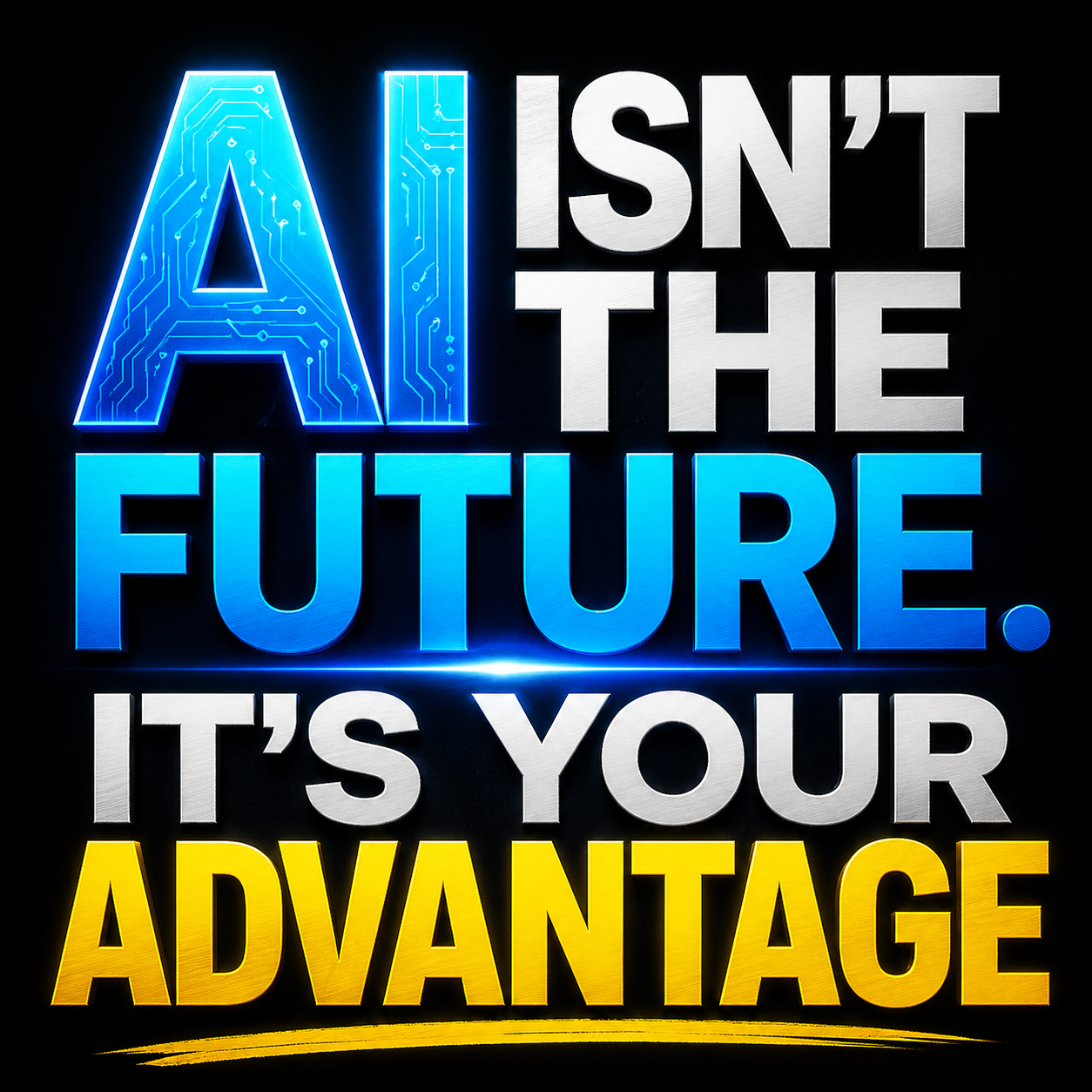
AI is not the future anymore.
It is the advantage sitting in front of you.
The only real question is whether you are ready to use it properly.
Next step
If this thinking fits, join the room.
WLBT is built around trust, standards, active participation, and real business relationships.